The Truth Is on the Label—If You Know Where to Look
You've heard the buzz about Mānuka honey. Maybe a friend swears by it for immune support, or you spotted it glowing on the shelves at your favorite wellness store. But when you're standing in front of a whole lineup of jars—all claiming to be "authentic," "premium," or "active"—how do you know which one actually delivers?
Here's the honest answer: authentic Mānuka honey doesn't hide behind vague language. The real story is right there on the label, waiting to be decoded. And once you know what to look for, shopping for the good stuff becomes second nature.
At Wedderspoon, transparency isn't a marketing line—it's how we operate. We don't just say our honey is authentic; we prove it. This guide walks you through exactly what to look for on a Mānuka honey label so you can shop with confidence every time.
What Makes Mānuka Honey Different?
Before diving into labels, it helps to understand why Mānuka honey is worth seeking out in the first place.
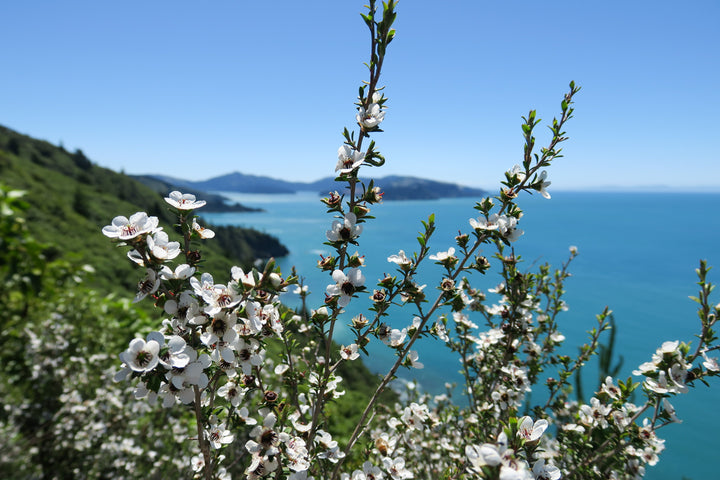
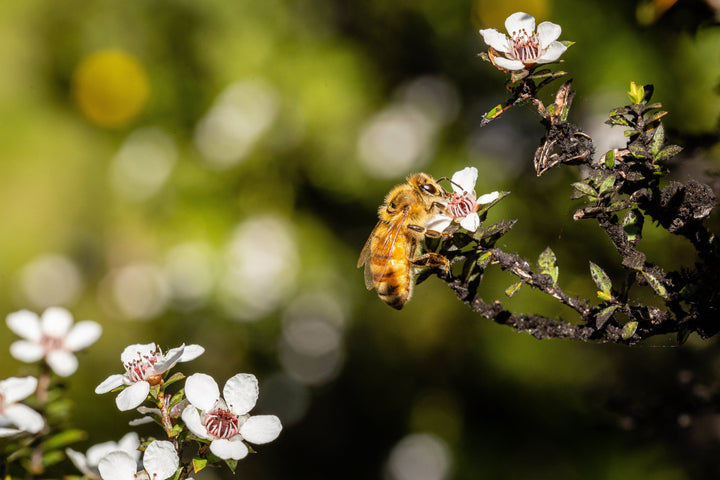
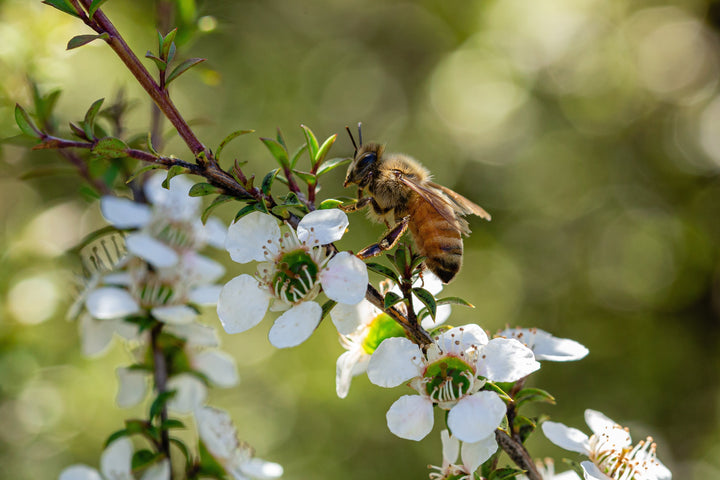
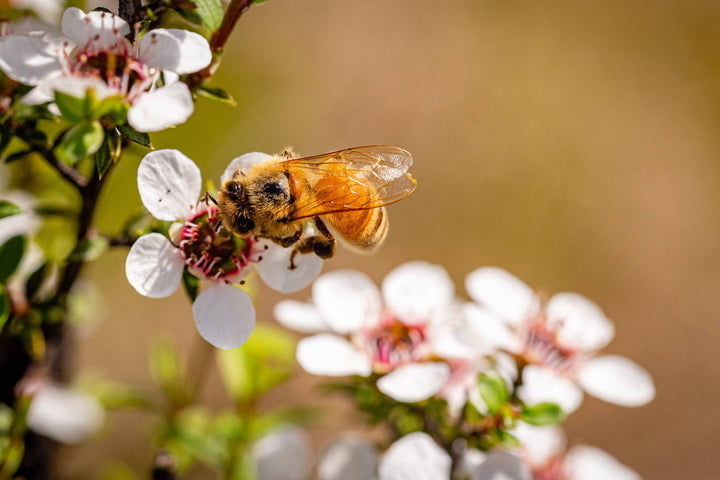
Mānuka honey comes from the nectar of the Mānuka bush (Leptospermum scoparium)—a resilient, wild-growing shrub native to New Zealand. While related species of Leptospermum exist in Australia, New Zealand Mānuka is recognized as the global benchmark, protected by official government standards set by New Zealand's Ministry for Primary Industries (MPI). What makes it extraordinary isn't just where it comes from—it's the unique natural compounds found inside.
The Key Compound: MGO
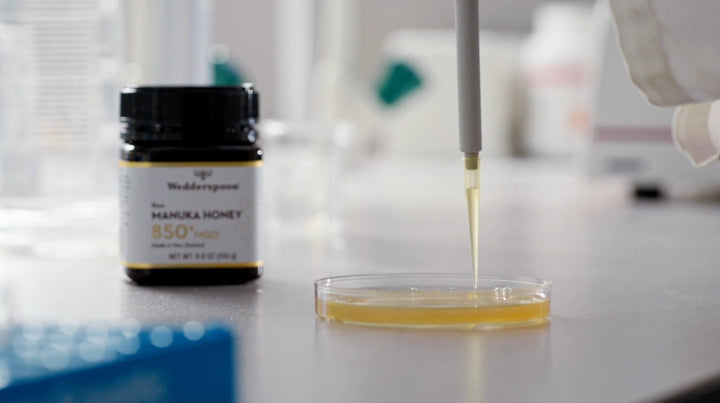
The standout is Methylglyoxal (MGO)—a naturally occurring compound responsible for Mānuka honey's well-documented antibacterial properties. The higher the MGO concentration, the more potent the honey.
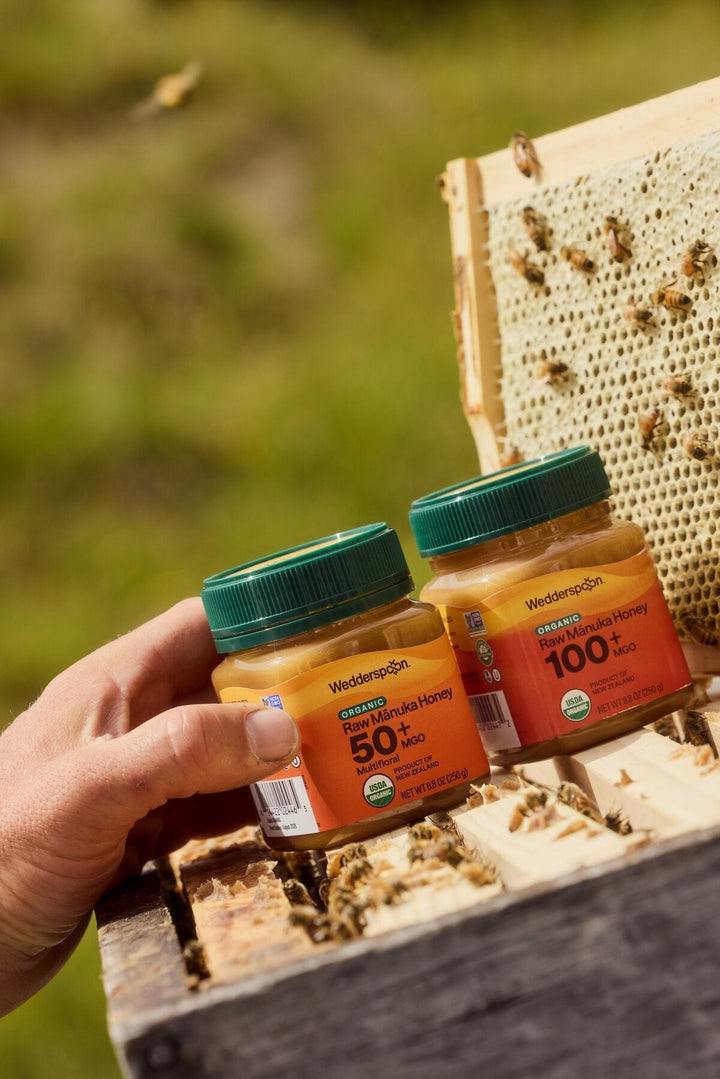
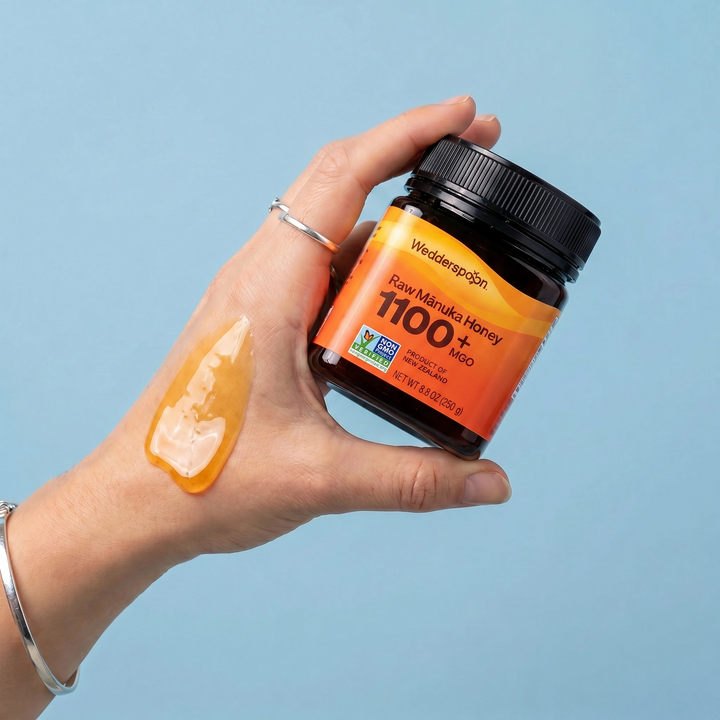
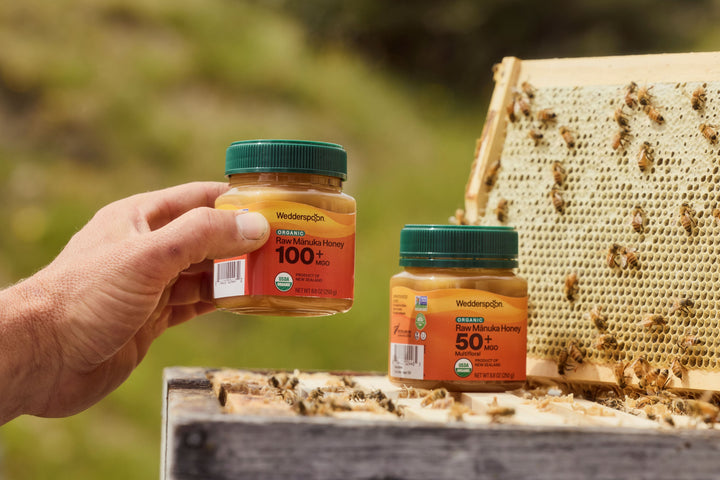
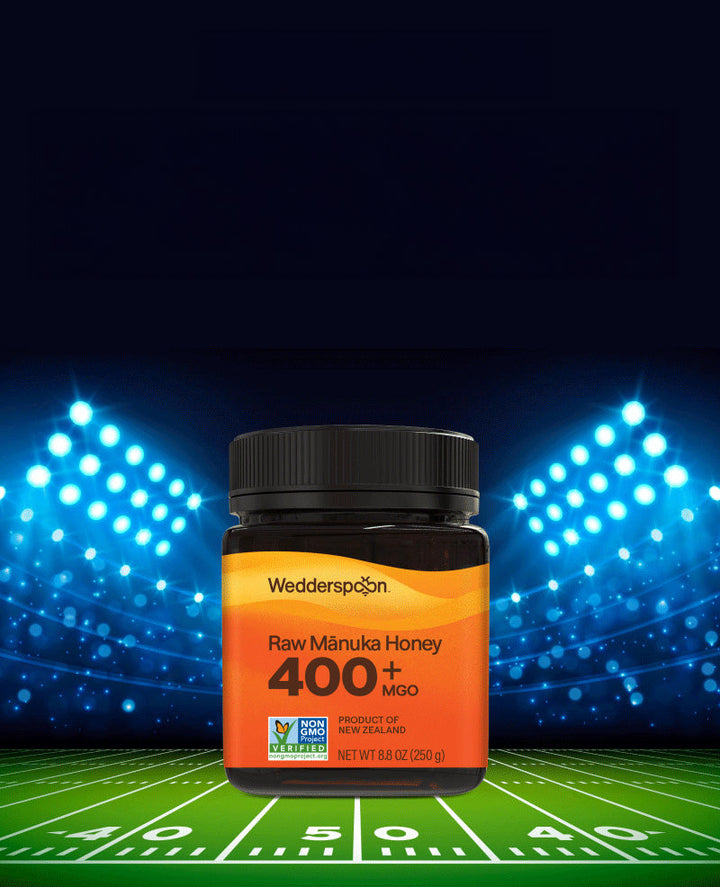
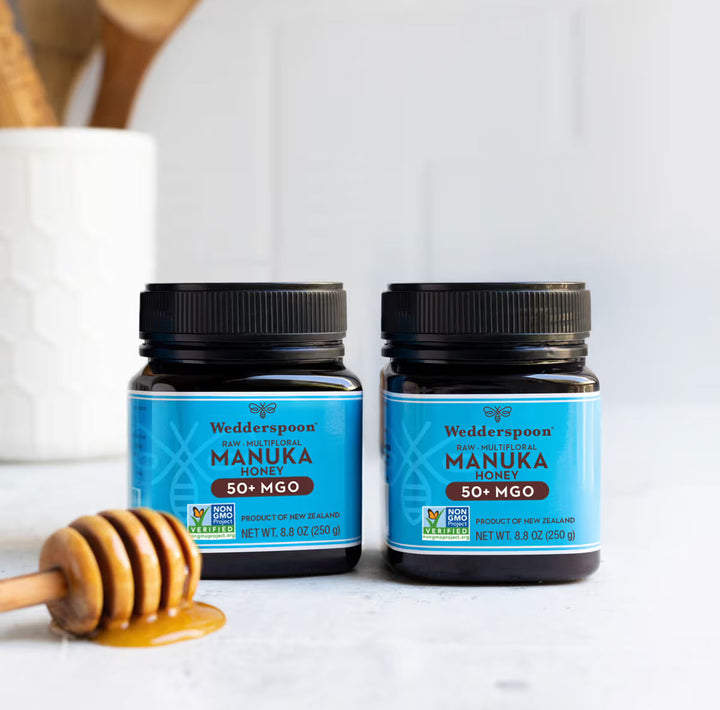
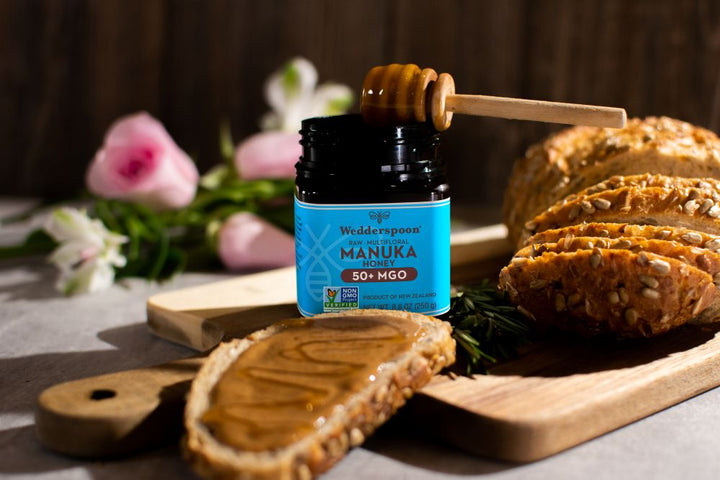
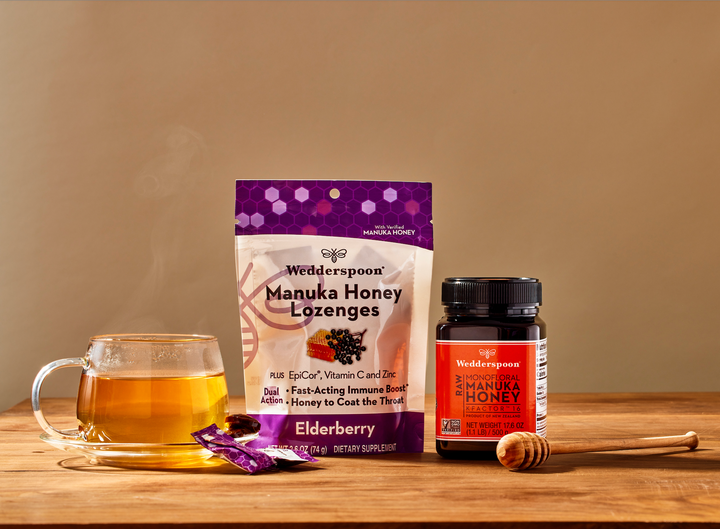
We test every batch for MGO and displays the level clearly on each jar, ranging from MGO 50+ (perfect for daily use) all the way up to MGO 1100+ (maximum potency).
But MGO is only one part of the authenticity picture. Here's everything else your label should be telling you.
6 Things Every Authentic Mānuka Honey Label Should Have
Think of the label as your authentication checklist. Here's what to look for:
1. MGO Rating or Verified Grading System
Potency tiers to know:
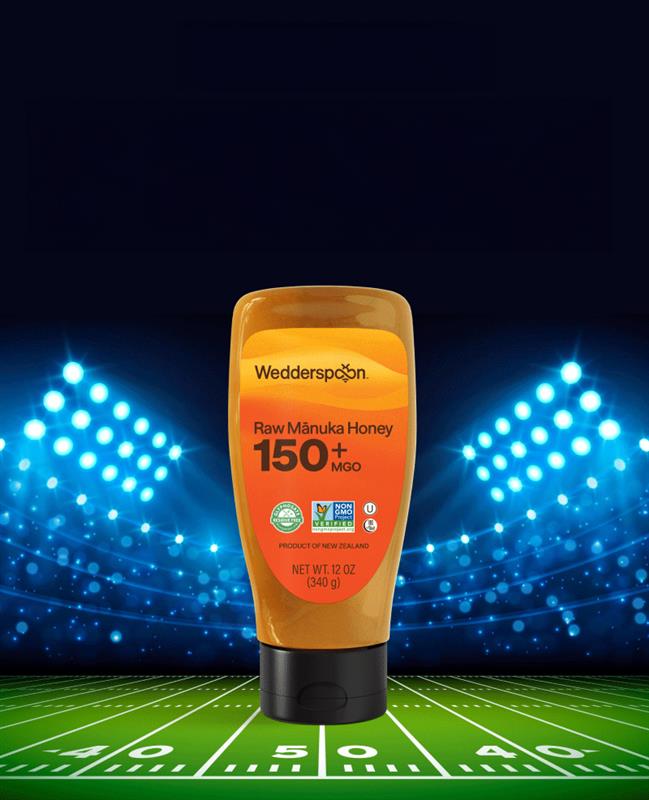
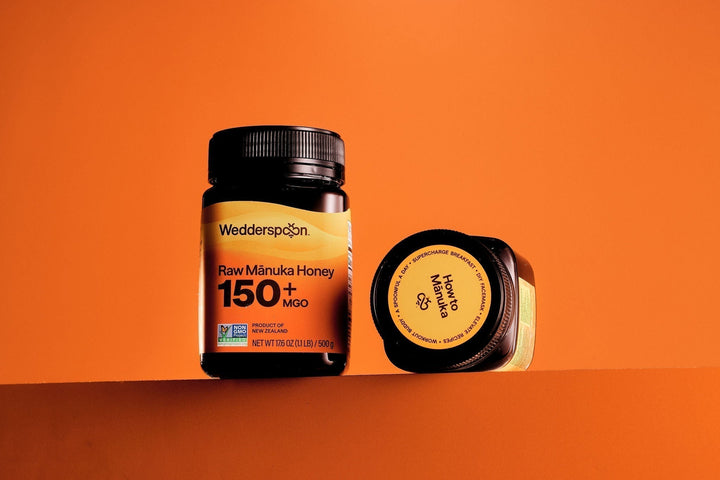
- MGO 50+ to MGO 150+ — Everyday wellness, great in tea, on toast, or by the spoonful
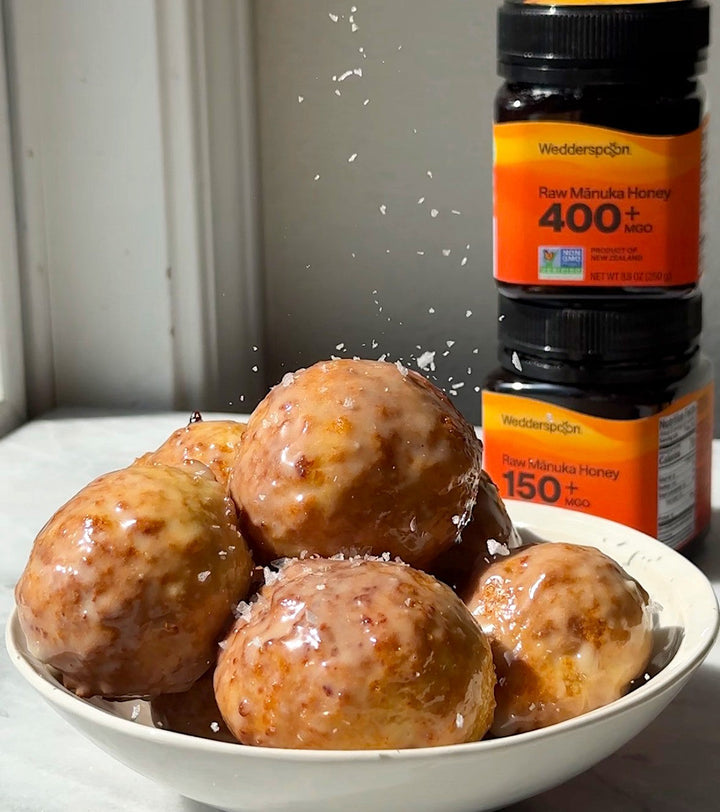
- 400+ MGO to 850+ MGO — Higher potency for more targeted support
- 1100+ MGO — Maximum strength
🚩 Red flag: Terms like "active," "bio-active," or "total activity" with no specific MGO or verified rating attached. These are marketing language, not certifications.
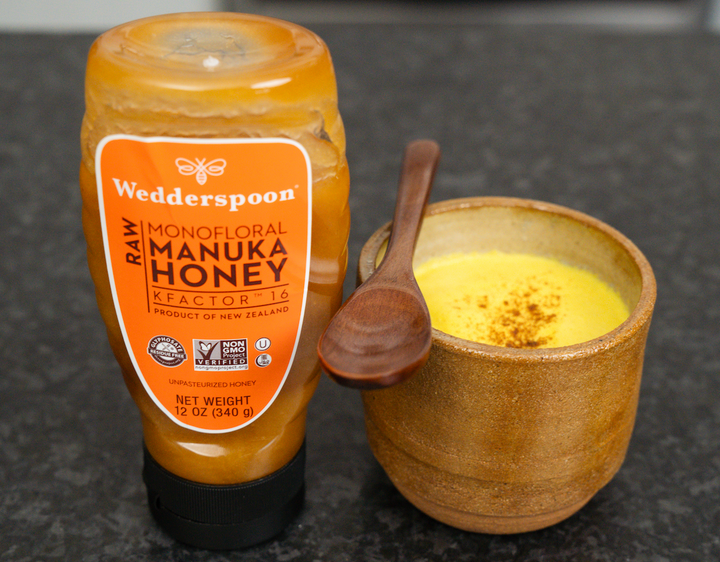
2. "Packed in New Zealand"—and the FernMark to Prove It
Authentic Mānuka honey should be packed in New Zealand—not just sourced there. The New Zealand FernMark is the government-backed symbol that proves a product meets New Zealand's official standards for origin, authenticity, and quality. It's issued by the New Zealand Story Group and requires businesses to demonstrate substantial NZ ownership and governance.
Wedderspoon proudly carries the FernMark license on our Mānuka honey—recognition of our role as an ambassador of the New Zealand story, and independent verification that what's in your jar is the real deal.
🚩 Red flag: Labels that say "Mānuka-style" or "imported honey" without specifying New Zealand origin. Also watch for brands that source in New Zealand but pack overseas—the MPI standard requires full traceability of New Zealand-packed honey.
3. Glyphosate Residue Free Certification
This one separates good Mānuka honey from great Mānuka honey. Glyphosate, the active ingredient in herbicides, has been classified as a probable human carcinogen by the International Agency for Research on Cancer. Even when bees forage in remote areas, pesticide creep is a real concern.
All Wedderspoon products are certified Glyphosate Residue Free by The Detox Project, which verifies that no glyphosate is present down to the government-recognized limit of detection (0.01 ppm). On top of that, we test annually for 292 different pesticides—not just glyphosate—to ensure our honey is as clean as it is potent.
🚩 Red flag: No mention of pesticide or glyphosate testing. For a product you're putting in your body daily, this should be non-negotiable.
4. Organic Certification (If It Matters to You)
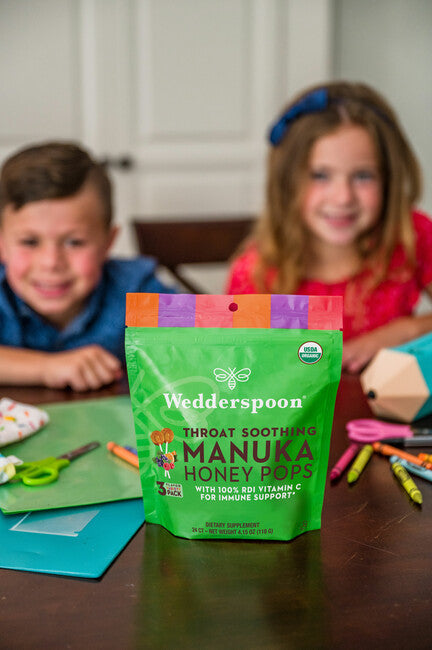
If you want the highest standard of clean sourcing, look for a USDA Organic designation. Wedderspoon is proud to offer Raw Organic Monofloral Mānuka Honey—the first organically certified Mānuka honey in North America. Sourced from the remote, pristine hills of New Zealand's South Island, where bees forage exclusively on wild Mānuka blossoms during the short annual bloom, it's USDA Organic certified and Glyphosate Residue Free.
5. Monofloral Designation
"Monofloral" means bees collected nectar predominantly from Mānuka flowers—not a mix of Mānuka and other plants. Monofloral honey has higher concentrations of the beneficial compounds you're after.
Some brands sell "multifloral" blends, which contain Mānuka nectar but at lower concentrations. That's not necessarily bad—Wedderspoon offers both—but the label should be clear about what you're getting. All of Wedderspoon's monofloral honey meets the MPI Mānuka Honey science definition, which includes testing for five chemical and DNA markers.
🚩 Red flag: No mention of monofloral vs. multifloral. Some brands obscure this.
6. Batch Number and Third-Party Testing
A batch number is your traceability guarantee. It means the producer can trace any given jar back to the hive, the harvest date, and the corresponding lab results. Reputable brands (like Wedderspoon) make this information accessible.
Wedderspoon is the first Mānuka honey brand in the world to earn Safe Quality Food (SQF) Level 3 certification—and still the only Mānuka honey facility certified for both Food Safety and Food Quality at that level. Every batch is independently tested by a New Zealand government-approved lab.
🚩 Red flag: No batch number, no lab testing information, no way to verify what you're buying.
How to Spot Fake Mānuka Honey: The Red Flags
The Mānuka honey market has a counterfeiting problem—globally, far more honey is sold as "Mānuka" than New Zealand's bees could possibly produce. Here's what to watch for:
❌ No verified MGO or grading system rating. If there's no specific number tied to a real standard, it's not verified Mānuka honey.
❌ Vague origin claims. "Mānuka-style" or "contains Mānuka" are not the same as "Product of New Zealand, Packed in New Zealand."
❌ No FernMark. New Zealand's own government recommends looking for the FernMark or "Packed in New Zealand" as primary authenticity indicators.
❌ Suspiciously low prices. Authentic Mānuka honey is harvested during a short annual bloom, tested rigorously, and handled carefully. The price reflects that reality.
❌ No glyphosate or pesticide testing. Clean sourcing should be documented, not assumed.
❌ "Active" or "bio-active" without a number. Before 2018, Mānuka honey had no global standard—these vague terms were common workarounds. Now that MPI has set an official definition, there's no excuse for ambiguity.

Why Wedderspoon Makes It Easy
We believe you shouldn't need a chemistry degree to buy good honey. That's why every jar of Wedderspoon Mānuka honey comes backed by:
✅ MGO-tested and rated honey — clear potency, no guesswork
✅ The New Zealand FernMark — government-backed proof of NZ origin and authenticity
✅ Certified Glyphosate Residue Free (The Detox Project) — clean down to 0.01 ppm
✅ Annual testing for 292 pesticides — the most thorough in the industry
✅ SQF Level 3 certification — the world's highest food safety and quality standard
✅ Organic options available — the first USDA Organic Mānuka honey in North America
✅ 100% packed in New Zealand — full traceability from hive to jar
✅ Raw, unpasteurized, and monofloral — nothing added, nothing removed
The Bottom Line: Trust the Label (When It Earns That Trust)
The next time you're shopping for Mānuka honey, keep this checklist in your back pocket:
- Verified MGO rating or credible grading system
- New Zealand origin, packed in New Zealand
- The FernMark seal
- Glyphosate Residue Free certification
- Monofloral designation
- Batch number and third-party lab testing
A jar that checks all six boxes? You've found the real thing.
And if you'd rather skip the label-reading entirely—Wedderspoon has done that work for you, on every single jar.
Ready to Experience Authentic Mānuka Honey?
Shop Wedderspoon Mānuka Honey →
From our everyday MGO 50+ to our MGO 1100+ maximum strength, and our USDA Organic Mānuka Honey for those who want the cleanest option available—every jar is tested, traceable, and carries the New Zealand FernMark.
Share this post